

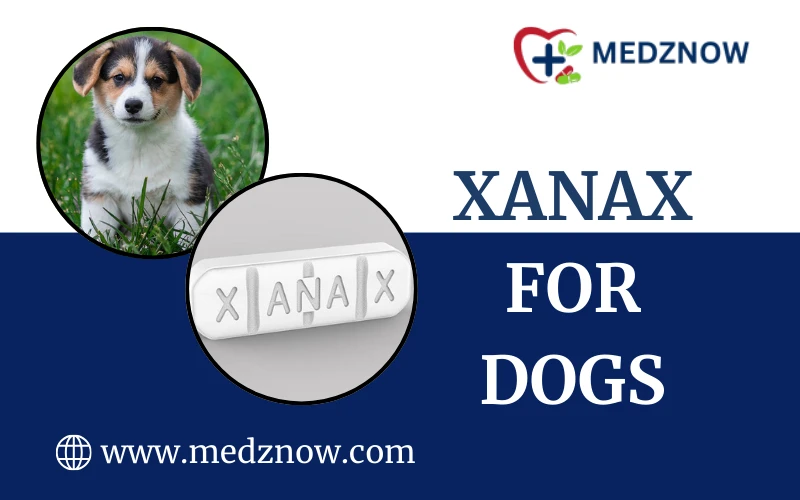
Is your dog exhibiting excessive panting, pacing, trembling, hiding, irritability, or aggression? That can be an anxiety symptom in dogs. Before giving any medication to dogs. It’s important to understand how it works, and are drugs safe for dogs, including Xanax. A drug is designed for humans and sometimes used for dogs with severe anxiety. It is beneficial for both humans and dogs, but in some cases, it comes with potential risks and side effects. This blog explains Xanax for dogs, and we will discuss whether related questions like Is Xanax safe for dogs, How quickly does Xanax work for dogs, and How long does Xanax work for dogs.
Xanax for Dogs: Benefits, Risks, and Alternatives
What Is Xanax Pill? & Is It Safe For Dogs
Xanax is a benzodiazepine that works by enhancing the effect of calming chemicals in the brain called GABA. Sometimes veterinarians prescribe Xanax off-label for dogs with severe anxiety or phobias. However, it is not completely approved for animal use, and the Xanax for dogs dosage must be carefully managed.
Xanax is safe for dogs when a veterinarian can prescribe it. Dogs metabolize drugs differently from humans. Thus, never give the human Xanax to dogs. Give the drug to the dogs as specified on the label; otherwise, that leads to some potential side effects such as
- drowsiness
- loss of coordination
- agitation
- increased appetite
- risk of dependency
When Veterinarians Prescribe Xanax for Dogs?
Xanax is prescribed for short-term use and should be used under medical supervision. When the question arises to prescribe Xanax for dogs. Veterinarians first observed dogs’ behaviors. Then they can prescribe if the dog can exhibit the following symptoms:
- Separation anxiety
- Noise phobias
- Travel anxiety
- Situational fear or aggression
- Post-traumatic stress
Xanax Dosage For Dogs
The medication should never be given to dogs without a veterinarian’s consultation. Most of the queries for dog owners how much Xanax for dogs and what dose of Xanax for dogs. Veterinarians are prescribed a dosage of Xanax for dogs and durations of administration that depend on the condition and response to the medication. Common Xanax for dogs dosage, 0.01 to 0.05 mg per pound (0.02 to 0.1 mg/kg) given every 12 hours. This Xanax dose for dogs starts working about 1 to 2 hours and stays in the dog’s body for 6 to 10 hours.
Precautions And Side Effects
Xanax for dogs has side effects and certain risks. Thus, give the drugs to the dogs when prescribed by a veterinarian. If the dogs have hypersensitivity or allergy to Xanax or benzodiazepine drugs, then avoid Xanax. If the dog has liver disease, then discuss with the veterinarian an alternative to Xanax. These precautions can help to minimize the risk of abuse, dependence.
Every medication has some side effects; similarly, Xanax has some common side effects such as sedation, increased appetite, difficulty with balance, and trouble walking. If the dog eats Xanax too much accidentally that lead to dog Xanax overdose symptoms, including.
- Difficulty with balance and trouble walking
- Hyperactivity or agitation
- Severe lethargy and sedation
- Vomiting
- Respiratory depression
- Low blood pressure
Drug Interaction
Drug intercation is a major reason for addiction and dependence. So inform the veterinarian if the dog takes any medication or supplements while being prescribed Xanax. Don’t give Xanax to dogs if the dog is already taking the following medication.
- Antacids
- Antifungals
- Antihistamines
- Behavioral medications
- Breathing medications
- Glaucoma medications
- Heart medications
- Ifosfamide
- Maropitant
- blood pressure medications
- Opioids (Tramadol and Oxycodone)
- Phenobarbital
- Rifampin
Alternatives To Xanax Tablets for Dogs
Every medication has a benefit and some consequences; similarly, Xanax comes with some potential risks. If you are seeking anxiety treatment without any side effects or risks. The following natural strategies have similar effectiveness for anxiety like Xanax.
- Behavioral Training: Desensitization can help the dog become less reactive to anxiety over time.
- Supplements: When the veterinarian prescribes natural products (CBD oil, L-theanine, or melatonin) that provide mild calming effects, give them to the dogs.
- Other Medications: if the dog has an allergy to Xanax or benzodiazepine drugs, then these medications are helpful for the anxiety, such as Trazodone, Fluoxetine (Prozac), or Clonidine.
Natural Remedies For Dog Anxiety
- Exercise & Mental Activities: doing a daily walk routine that enhances energy level and reduces nervous energy. Play an interactive toy like a puzzle.
- Herbal Remedies: Some herbal remedies are beneficial to reduce dogs’ anxiety, including Chamomile, Valerian root, and Passionflower.
- Essential Oils: Lavender, frankincense, or chamomile oil are very helpful to reduce stress in some dogs.
- Music & Sound Therapy: play soft classical or specific dog calming music that reduces anxiety.
- Routine and Safe Space: Create a quiet and safe place where dogs feel safe and maintain schedules.
- Massage & Touch: Massage can reduce stress hormones, and TTouch (Tellington Touch) techniques can calm anxious animals.
Frequently Asked Questions:
Can you give Xanax for humans to dogs?
Now, you can’t give Xanax for humans to dogs because. Both humans and dogs are metabolized differently. Thus, they are Xanax is different. If you can give human xanax for dogs dosage, it that lead to dangerous effects such as sedation, disorientation, low blood pressure, breathing issues, or even coma.
Can dogs take Xanax for sleep?
A veterinarian prescribed Xanax to dogs for anxiety, panic, and phobias that may help to sleep. But it is not recommended for sleeping issues. It is not safe to use without veterinarian guidance. If the dogs have a sleeping issue, then consult with the veterinarian and seek a safe and effective solution.
Does Xanax cause diarrhea in dogs?
Xanax is recommended for anxiety and panic disorder in humans, that also prescribed for dogs under veterinarian supervision. It has various potential side effects, but diarrhea is not a common side effect of Xanax for dogs.
Can dogs take Xanax and Benadryl together?
In most cases, veterinarians recommend multiple medicines at the same time for a dog to control various conditions. Similarly, veterinarians prescribe Xanax and Benadryl together to dogs. Both drugs have their own benefits.
Can dogs take Xanax for storm anxiety?
Xanax is approved for dogs for several anxiety disorders. Strom anxiety is one of them. If your dog has strong anxiety symptoms, then give Xanax to the dog with the veterinarian’s suggestions.
Final Words
Xanax is an effective and short-term treatment for dogs with serious anxiety, but under a veterinarian’s guidance. Xanax dosage is different for each dog. For need long-term anxiety treatment management, follow behavioral training, environmental adjustments, and sometimes alternative therapies. Consult with the vet and discuss safe and effective medication for dogs.