
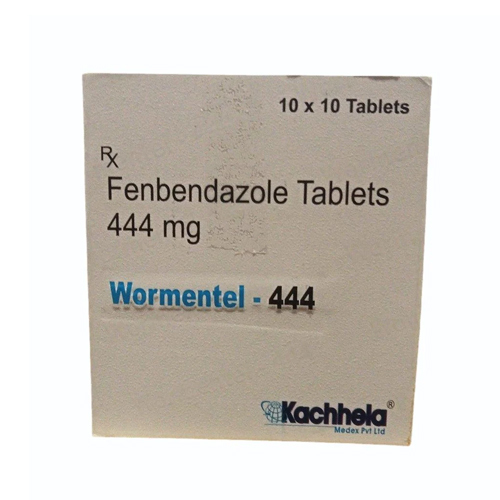
Fenbendazole 444 mg: Uses, Safety and Important Warnings
Fenbendazole 444 mg is a strength associated with certain
veterinary deworming products. Fenbendazole is an antiparasitic
medicine used in veterinary practice to control specific
parasitic worms in animals. The intended use depends on the
product label, animal species and veterinary instructions.
not approved as a human medicine. Veterinary products should
not be used by people to treat worms, cancer or other illnesses.
Human safety and effectiveness have not been established, and
published medical literature describes cases of liver injury
associated with human use.
What Is Fenbendazole 444 mg?
Fenbendazole belongs to a class of antiparasitic medicines
called benzimidazoles. It is used in veterinary medicine
against certain susceptible internal parasites. It is
available in different veterinary formulations, and the
products are not automatically interchangeable.
A label stating 444 mg indicates an amount of active
ingredient in a particular product unit. It does not
establish a human dose or explain how the product should
be used for every animal. Always check the complete label
and consult a veterinarian about an animal’s treatment.
What Is Fenbendazole Used For?
Veterinary fenbendazole products may be authorised for
controlling particular parasitic worms in specified animal
species. Depending on the product, the target parasites
may include certain roundworms, hookworms or whipworms.
The exact authorised uses vary by product and country.
- Veterinary parasite treatment: Certain products are used against susceptible intestinal worms in animals.
- Animal-specific care: A veterinarian considers the animal’s species, condition and suspected parasite before selecting a product.
- Parasite management: Treatment may be combined with appropriate veterinary testing, hygiene and prevention measures.
A product labelled for pets should only be used in accordance
with its veterinary instructions. Do not assume that a product
suitable for one animal is suitable for another species.
How Does Fenbendazole Work?
Fenbendazole acts on cellular structures in susceptible
parasites, interfering with processes they need to survive.
This activity can help control particular worm infestations
in animals when the medicine is used appropriately.
Its effectiveness depends on the parasite and the veterinary
product. Fenbendazole should not be considered a universal
treatment for all parasites or unrelated health conditions.
Understanding the 444 mg Strength
Milligrams describe the amount of an ingredient, but the
number alone does not explain the product’s concentration,
formulation, intended species or directions. Read the full
product label rather than relying only on the strength
printed on the packaging.
Some products labelled 444 mg are marketed as pet dewormers.
Such labels may contain animal-specific instructions and
warnings against human consumption. The FDA’s public drug
labelling database includes an example of a 444 mg
fenbendazole capsule labelled for pets only.
View an example of a 444 mg veterinary product label
.
Animal products are not substitutes for medicines approved
for people. If you suspect a parasitic infection, seek medical
advice about testing and suitable human treatment.
Is Fenbendazole 444 mg Approved for Human Use?
Fenbendazole is a veterinary medicine and is not approved
for human treatment in the United States. Its safety and
effectiveness for treating human illnesses have not been
established. People should not take pet dewormers as a
substitute for medical care.
If you think you have a parasitic infection, a healthcare
professional can assess your symptoms, possible exposure
and medical history. Depending on the suspected parasite,
tests may be needed to determine the appropriate treatment.
Fenbendazole and Cancer Claims
Fenbendazole is sometimes discussed online as a possible
cancer treatment. However, laboratory research or theories
about how a substance affects cells do not demonstrate
that it is safe or effective for treating cancer in people.
There is no established clinical evidence that fenbendazole
is a safe and effective human cancer treatment. It is not
a replacement for care recommended by an oncology team.
Delaying proven treatment may allow a disease to progress
and can put health at risk.
Anyone considering fenbendazole while receiving cancer
treatment should discuss the issue with their oncologist
or pharmacist. It is important to disclose any veterinary
products or supplements being used so that possible risks
can be assessed.
Potential Side Effects and Health Risks
Because fenbendazole is not approved for human use, its
safety profile in people is not adequately established.
There is no reliable human dosing schedule that can be
recommended for self-treatment.
Published medical literature has documented liver injury
associated with people taking fenbendazole themselves.
Some cases have been serious. These reports do not tell
us exactly how often injury occurs, but they show that
unapproved use can carry meaningful risks.
Important concerns include:
- Liver injury: Symptoms may include yellowing of the skin or eyes, dark urine, unusual tiredness or abdominal discomfort.
- Uncertain human safety: The appropriate human dose and risks have not been established.
- Product formulation: Veterinary products may have ingredients or concentrations not intended for human consumption.
- Potential interactions: Risks when combined with other medicines may not be well characterised for human use.
- Delayed medical care: Self-treatment may delay diagnosis or treatment of the actual condition.
Contact a healthcare professional or poison-information service
promptly for advice. Keep the package available so the product
can be identified. Do not take more. Seek emergency help for
severe symptoms, collapse, confusion or difficulty breathing.
Veterinary Safety Considerations
When fenbendazole is prescribed or recommended for an animal,
the product and treatment plan should be selected according
to veterinary guidance. Extra or prolonged treatment is not
automatically safer or more effective.
- Check that the product is intended for the animal species being treated.
- Follow the product label and veterinary instructions.
- Ask a veterinarian before treating an animal that is unwell, pregnant or nursing.
- Do not extend or repeat treatment without professional advice.
- For food-producing animals, follow the relevant withdrawal periods and food-safety directions.
- Store veterinary medicines safely and keep them out of reach of children.
The US FDA has reported bone marrow suppression, including
pancytopenia, in dogs associated with prolonged extra-label
use of fenbendazole. This reinforces the importance of
following veterinary directions rather than changing the
duration independently.
Read the FDA’s veterinary safety communication
.
What to Do If You Suspect a Worm Infection
Symptoms that people associate with worms can have many
causes. A healthcare professional can decide whether an
examination or laboratory testing is needed and recommend
a treatment that is suitable for the suspected or confirmed
parasite.
Different parasites respond to different medicines.
Do not choose a veterinary product based on online claims,
and do not substitute fenbendazole for a human medicine
without medical advice.
Frequently Asked Questions About Fenbendazole 444 mg
1. What is fenbendazole 444 mg?
It is a strength found in some fenbendazole veterinary
products. Fenbendazole is used to control certain
parasitic worms in animals, depending on the product
and its authorised indications.
2. Can humans take fenbendazole 444 mg?
Fenbendazole is not approved as a human medicine.
People should not take veterinary fenbendazole products
to treat themselves. Ask a healthcare professional
about appropriate treatment for a human illness.
3. Is fenbendazole 444 mg a cancer treatment?
No. Fenbendazole is not an approved human cancer
treatment, and evidence has not established that it
is safe and effective for treating cancer in people.
4. Can fenbendazole cause liver damage?
Published medical reports describe liver injury
associated with human use. Anyone who has taken
fenbendazole and develops yellow skin or eyes, dark
urine or other concerning symptoms should seek
medical advice promptly.
5. Is fenbendazole the same as mebendazole?
No. They are different active ingredients, although
they belong to the same broad medicine family.
Their approved uses and safety information differ.
Do not substitute one for the other without advice.
6. What should I do if I accidentally take a pet dewormer?
Contact a healthcare professional or poison-information
service promptly and provide the package details and
amount taken, if known. Do not take further doses.
Seek emergency assistance if severe symptoms occur.
7. How can I check whether a fenbendazole product is for animals?
Read the complete label, including the intended species,
active ingredient, directions and warnings. If the
product status is unclear, consult a veterinarian or
pharmacist. Do not assume a product is suitable for
human use because it is sold online.
Trusted Sources and Further Reading
NIH LiverTox: Fenbendazole and liver injury
Published medical case report on severe liver injury associated with fenbendazole use
DailyMed: Example of a 444 mg veterinary fenbendazole label
FDA: Fenbendazole safety information for veterinarians
Conclusion
Fenbendazole 444 mg is a strength associated with certain
veterinary deworming products. The product’s intended use
depends on its full label and the animal species for which
it is authorised. It should not be presented as an established
human treatment or used for self-medication.
For human health concerns, including suspected parasitic
infections or cancer, seek advice from a qualified healthcare
professional. For animal parasite treatment, consult a
veterinarian and follow the specific product instructions.
Medical disclaimer: This page is for general
educational purposes only. It does not recommend fenbendazole
for human use and does not replace professional medical or
veterinary advice.



Reviews
There are no reviews yet.