
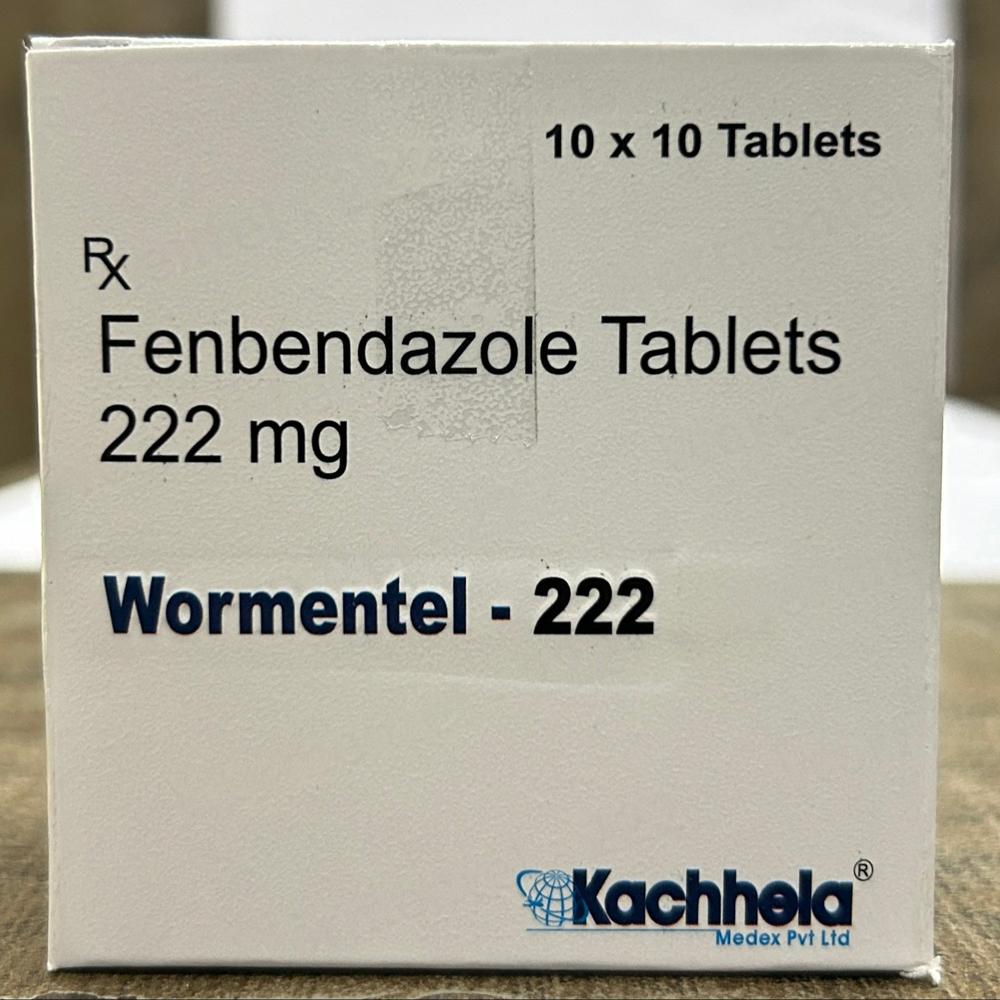
Fenbendazole 222 mg: Uses, Safety and Important Warnings
Fenbendazole is an antiparasitic medicine used in veterinary care to treat certain worm infections in animals. Searches for fenbendazole 222 mg may refer to a particular product, capsule, or the concentration stated on a veterinary granule label. Understanding the formulation is important because these descriptions are not necessarily interchangeable.
Fenbendazole is not approved for human treatment in the United States. Veterinary formulations should not be used to self-treat human infections, cancer, or other conditions. There is no established, approved human dose for fenbendazole. Speak with a qualified healthcare professional about symptoms or treatment questions.
What Is Fenbendazole 222 mg?
Fenbendazole belongs to a class of medicines called benzimidazole anthelmintics. These medicines act against certain parasitic worms. Veterinary products containing fenbendazole are used in selected animal species for specific parasites, according to the product label and veterinary direction.
The number “222 mg” needs to be interpreted in the context of the packaging. For example, an official veterinary granule label describes a 22.2% formulation containing 222 mg of fenbendazole per gram of granules. That is a concentration, not the same thing as saying that every product contains 222 mg in one capsule or serving.
Always check the exact product name, active ingredient, concentration, intended animal species and directions. Product labels for veterinary medicines are not instructions for human use.
What Is Fenbendazole Used For?
Fenbendazole is used in veterinary medicine to control certain susceptible internal parasites. The specific approved uses depend on the formulation, animal species and local product authorization. A veterinarian can determine whether a fenbendazole product is appropriate for an animal and which instructions apply.
It is not an approved human medicine in the United States. A veterinary product should not be substituted for a human antiparasitic medicine prescribed by a healthcare professional.
Does Fenbendazole Treat Cancer in Humans?
Fenbendazole is sometimes discussed online as an alternative cancer treatment. However, laboratory findings or animal research do not establish that a medicine safely and effectively treats cancer in people. Fenbendazole has not been demonstrated to be an effective human cancer treatment and is not approved for that purpose.
Using it instead of evidence-based cancer care may delay appropriate treatment. People receiving cancer treatment should discuss any supplement, veterinary product or non-prescribed medicine with their oncology team before using it. This is especially important because an adverse reaction could complicate treatment or make it harder to identify the cause of new symptoms.
Safety Risks and Possible Side Effects
Human safety information for fenbendazole is limited because it is a veterinary medicine, not an approved human treatment. Reported concerns include gastrointestinal symptoms and potentially serious liver injury in people who have taken it without medical supervision.
Possible warning symptoms that need medical attention include:
- Persistent nausea or vomiting.
- Unusual tiredness or weakness.
- Abdominal pain, especially in the upper abdomen.
- Dark urine or unusually pale stools.
- Yellowing of the skin or the whites of the eyes.
- A severe rash, swelling or difficulty breathing.
Yellowing of the eyes or skin, dark urine with feeling unwell, or severe abdominal symptoms may indicate a serious problem and warrant urgent medical assessment. Difficulty breathing or swelling of the face or throat requires emergency care.
The US National Institutes of Health LiverTox resource describes cases of clinically apparent liver injury associated with self-administration of fenbendazole. A published case report also documents severe drug-induced liver injury. These reports do not establish how frequently harm occurs, but they show why unsupervised human use should not be considered safe.
Can Fenbendazole 222 mg Be Taken by Humans?
Fenbendazole is not approved for human use in the United States, and there is no established approved human dosing regimen. A strength printed on a veterinary product or on an online listing does not establish that the product is suitable for people.
Do not use veterinary fenbendazole to treat a suspected parasite infection or another health condition without medical advice. A clinician can assess the cause of symptoms and recommend a treatment that has been evaluated for human use.
What Should You Check on the Product Label?
If you are reviewing a product for veterinary purposes, check the label carefully and follow the instructions provided by your veterinarian. Relevant details include:
- Active ingredient: Confirm that the product lists fenbendazole.
- Concentration and formulation: Determine whether the label gives an amount per gram, per millilitre, or per unit.
- Intended species: Confirm which animals the product is labeled for.
- Approved indication: Check the parasites and uses covered by that particular label.
- Warnings and duration: Follow veterinary instructions and do not extend treatment independently.
Do not calculate a human dose from an animal product’s concentration or from instructions intended for another species.
Frequently Asked Questions
1. What does fenbendazole 222 mg mean?
It depends on the product. Some veterinary granules are labeled as containing 222 mg per gram. Other products may use different formulations or labeling. Check the exact package rather than assuming the number refers to one capsule or dose.
2. Is fenbendazole 222 mg approved for humans?
No. Fenbendazole is a veterinary antiparasitic and is not approved for human treatment in the United States.
3. Can fenbendazole treat cancer?
It has not been established as a safe and effective cancer treatment in humans. Do not replace or delay recommended cancer treatment because of online claims about fenbendazole.
4. Can fenbendazole cause liver problems?
Published medical reports describe liver injury associated with self-administration of fenbendazole. Seek medical assessment if you have taken it and develop jaundice, dark urine, significant abdominal pain or unusual fatigue.
5. Is there a recommended human dose of fenbendazole 222 mg?
There is no approved, established human dosing regimen. Veterinary instructions should not be adapted for human use.
6. What should I do if I have already taken fenbendazole?
Contact a healthcare professional or poison control service for advice, especially if the product was intended for animals or you are taking other medicines. Seek urgent care for serious symptoms such as yellowing of the eyes or skin, or emergency care for breathing difficulties or facial swelling.
Trusted Sources and Further Reading
- NIH LiverTox: Fenbendazole and liver injury information
- DailyMed: Official Panacur veterinary granule label
- FDA: Safety information on certain extra-label veterinary uses
- Published case report: Severe drug-induced liver injury associated with fenbendazole
Final Thoughts
Fenbendazole 222 mg is a product-related search term that needs careful interpretation because concentration and formulation can vary. Fenbendazole has a role in veterinary parasite control when used according to the appropriate label and veterinary advice, but it is not an approved human treatment. For human symptoms, parasite concerns or cancer-related questions, consult a qualified healthcare professional rather than relying on veterinary products or online dosing claims.



Reviews
There are no reviews yet.