

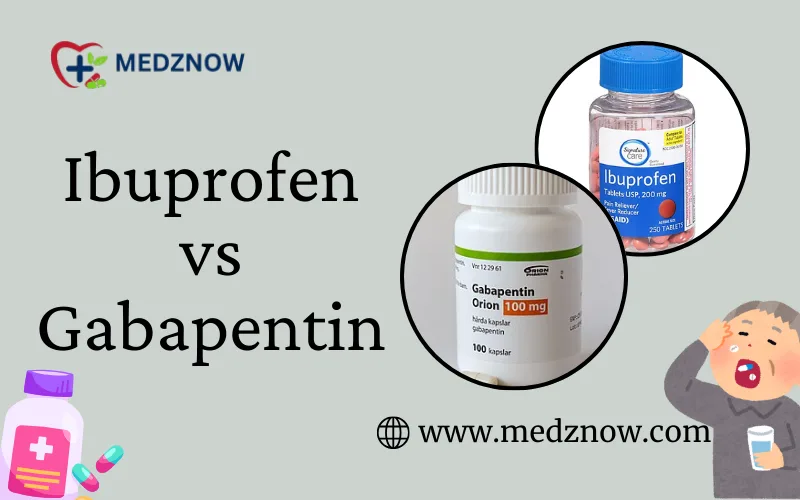
When pain shows up in our lives, our first instinct is always to reach out for a painkiller that gives fast relief. Ibuprofen and Gabapentin are the names that pop up, but they work very differently. Ibuprofen is the most famous over-the-counter drug that is a magic aid for every ache. On the other hand, gabapentin is used to treat people facing unbearable pain, like nerve pain. So, in today’s blog, we will understand how both of the drugs work for pain and whether can you mix ibuprofen and gabapentin. Because understanding the Ibuprofen vs Gabapentin difference will help you choose the safest and best option for your health situation.
Difference Between Ibuprofen Vs Gabapentin For Pain Management
Overview of Ibuprofen
It is a commonly used painkiller used to treat mild pain signals, which is available easily. You can purchase this medication with or without a valid prescription. It is used to treat pain that happens due to inflammation in the body. It can be used on children above 6 months old and adults. It shows its effects as long as you use it. There are some conditions that make an individual unfit for using Ibuprofen, such as;
- Hypersensitivity
- Pregnancy
- Active bleeding
- Heart surgery
- Kidney issues
- Hives
- Asthma
- Stomach ulcers
Overview of Gabapentin
Gabapentin is a prescription medication which is mainly used to treat nerve pain and control partial seizures in people with epilepsy. It is a medicine which helps to quite down or calm down the overexcited nerves in the brain and spinal cord. It helps to change the way the nerve sends pain signals to he brain. It is approved by the FDA and also used for several off-label conditions. In certain health conditions, you should not use Gabapentin; they are
- Asthma
- Weak kidney
- Allergies
- Anxiety
- Suicidal behaviour
- Pregnancy
- Breastfeeding
- Drug abuse
Working Process
- Ibuprofen: When there is something wrong with the body, it naturally generates a chemical called prostaglandins. These chemicals are responsible for creating inflammatory signs in the system. Inflammatory signs are fever, feeling of pain and swelling. So, Ibuprofen stops the generation of the chemical, which helps to reduce inflammation.
- Gabapentin: When an area is affected in the body, the nerves become overactive and send contentious pain signals to the mind. Gabapentin blocks the path of the pain signals being sent to the brain, frequently or too intensely. When the path of calcium channels is blocked, fewer signals are sent to the brain, which helps to calm the overactive nerves.
Formulation And Dosages
| Parameters | Ibuprofen | Gabapentin |
| Drug Class | Nonsteroidal anti-inflammatory drug | Anticonvulsant |
| Formulation | Tablets: Chewable, oral, capsules, and injections | Oral capsules, tablets, oral solutions |
| Dosages(mg) | 200, 400,600, and 800 | 100, 300, 400, 600, and 800 |
| Brand Names | Advil, Actiprofen, Motrin, Genpril | Neurontin, Gabarone, Fanatrex |
Medical Use
| Drug Name | FDA-approved | Off label |
| Ibuprofen | Arthritis, Spondylitis, Severe pain, Gout attacks, Pericarditis | Fever, Minor ache, Cold and flu, Menstrual pain |
| Gabapentin | Nerve pain, Seizures, Restless leg | Diabetic nerve damage, Fibromyalgia, Anxiety, Cough, Alcohol Withdrawal |
Addiction And Physical Dependence
- Gabapentin: Long-term use of Gabapentin can cause dependence in the system. While not being an opioid, it still carries the potential risk of misuse. Because it creates a sedative effect or feeling of euphoria, if the user stops taking the medication suddenly after using it continuously for a long time, then it can result in withdrawal symptoms.
- Ibuprofen: It is a simple drug, so it has no chance of addiction or dependence. But if this medication is used for a long time, then it has a high chance of stomach ulcer or internal bleeding issues in the system.
Drug Interactions
Every drug reacts with other drugs. Likewise, Gabapentin and Ibuprofen can interact with several other groups of drugs. Drug interaction can be very serious sometimes because it happens inside the system.
Drugs That Interact With Gabapentin
Ibuprofen Drug Interactions
- Aspirin
- Ketoconazole
- Lithium
- Iodixanol
- Galantamine
- Fluoxetine
Which is Better For Pain, Gabapentin or ibuprofen?
We can not decide which is better for pain without the help of a doctor. Because ultimately the effectiveness of the drug is totally dependent on the type of pain the patient is feeling, other health conditions, and the drug tolerance of the patient. Before choosing the best drug, doctors might consider the following factors.
| Features | Ibuprofen | Gabapentin |
| Primary Target | Enzymes throughout the body | Calcium Channels in the Central Nervous System |
| Working | Calming overactive nerve signals | Reducing the inflammation and fever |
| Type of Pain Treated | Inflammatory pain | Nerve pain |
| Availability | Over-the-counter and Prescriptional | Prescription only |
Can You Take Ibuprofen And Gabapentin Together?
Doctors often suggest ibuprofen and gabapentin together. Because mixing ibuprofen and gabapentin has significant health benefits. They create an additive effect which gives better relief than using only the drug. They both work in different paths of pain, which can result in more effective pain relief than usual medicines. But this mixture can show harmful effects like;
- Weak kidney function
- Internal bleeding
- Excessive Drowsiness
- Dizziness
Side effects
After effects are the signs that the medication has started working in the body, but when the after effects start affecting the flow of your daily life, they become side effects. Side effects can range from simple and mild to serious and harmful. Let’s see the side effects of each drug one by one.
Common Side Effects of Gabapentin
- Drowsiness
- Dizziness
- Headache
- Weight gain
- Dry mouth
- Blurred Vision
Serious side effects of Gabapentin
- Hives
- Slowed Breathing
- Blistering
- Jaundice
- Depression
- Skin peeling
Like Gabapentin, Ibuprofen also has some common and serious side effects. When it is used for more time than recommended, it shows serious side effects.
Ibuprofen Common Side Effects
- Stomach Ache
- Nausea
- Vomiting
- Diarrhea
- Headache
- Rash
Ibuprofen Serious Side Effects
- Black stool
- Blood Vomiting
- Stroke
- Cardiac arrest
- Hypertension
- Wheezing
- Asthma
Summary
Now we can conclude that both medications are effective in treating pain. The choice between these two medications totally depends on the patient and the level of pain. If both of the medications are used properly with responsibility, then they can be very helpful to give complete relief from pain and reduce inflammation easily.