

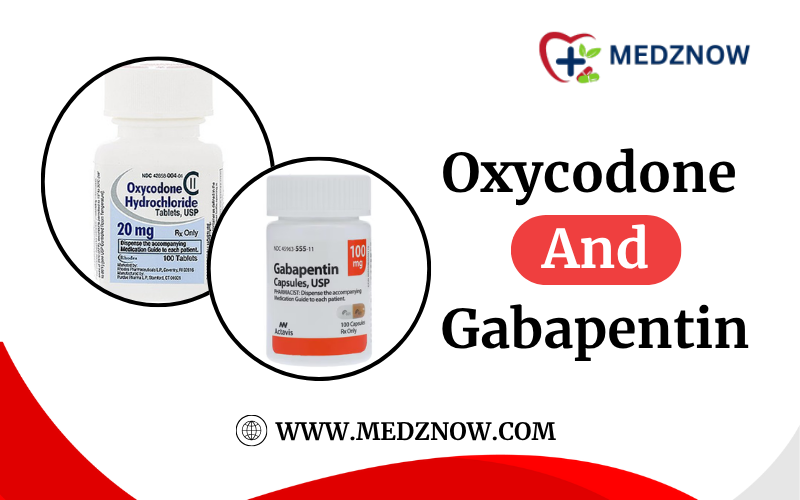
Are you seeking treatment for both chronic pain and nerve-related conditions? Both Oxycodone and Gabapentin are commonly prescribed for this purpose. Now, you have a question: “Is it safe to take Oxycodone and Gabapentin together?” This question is explored in the blog, but it is possible to take Oxycodone and Gabapentin together for individual purposes. They are pain relievers but have different mechanisms, additional benefits, dosages, and formulations. In this blog, we will explore how both drugs work individually, how they work together, and what should patient and healthcare know. This guide helps to manage both drugs and prevent harmful risks.
How To Work Oxycodone And Gabapentin: Individually & Together
What is Oxycodone?
Oxycodone is a semisynthetic opioid and part of the narcotic analgesics, which works by binding the opioid receptors (mu, kappa, and delta receptors). Mu receptors block pain signals in the nervous system and reduce pain perceptions. Kappa is involved in pain perception, stress response, and mood regulation, while delta receptors block the pain signal in the gut and within the cell. It is available in two forms: immediate-release and extended-release. Oxycodone IR is designed for short-term use for pain relief, while Oxycodone XR is designed for long-term use for pain relief.
Common Use of Oxycodone:
- Post-surgical pain
- Severe injury-related pain
- Chronic pain conditions (cancer-related pain)
Potential Risks and Side Effects
Mostly, misuse of Oxycodone causes addiction, overdose, and death. Thus, only take Oxycodone as prescribed by the doctor. Oxycodone leads to some common side effects/ when starting the medication, and also has some serious side effects that commonly occur when a person takes a higher dose for a longer time. Those side effects are Respiratory depression, slow heartbeat, extreme sleepiness, anxiety, suicidal thoughts, restlessness, irritability, and serious allergic reactions.
What is Gabapentin?
Gabapentin is an anticonvulsive medication used for nerve-related pain. It is available in brand (Horizant, Gralise, and Neurontin) and generic forms. Its doasge comes in various forms: tablet, capsule, extended-release, and oral solution. Gabapentin acts on the central nervous system. The drug works by modulating calcium channels and the release of neurotransmitters, which helps to treat neuropathic pain and epilepsy. It reduces nerve activity and perceptions of pain from nerve-related conditions.
Common Use of Gabapentin:
- Neuropathic pain (nerve-related pain)
- Seizure disorders
- Fibromyalgia
- Restless leg syndrome
Potential Risks and Side Effects
Misuse of Gabapentin causes various unwanted effects, such as overdose, dependence, and even coma or death. Its common side effects are dizziness, sleepiness, poor muscle control, fatigue, diarrhea, nausea, vomiting, lack of energy, dry mouth, weight gain, and tremor. Also, it has serious side effects, including serious allergic and skin reactions, suicidal thoughts or behaviors, and breathing problems, that occur for improper or frequent use, and drug interactions.
How Oxycodone and Gabapentin Work Together?
Oxycodone is effective for pain relief, while Gabapentin targets nerve pain specifically. When they are prescribed together, they can provide complete pain relief for dealing with both conditions, such as chronic pain and nerve-related pain. A healthcare provider may prescribe both drugs for post-surgical pain with nerve pain, chronic pain conditions, and pain from diabetic neuropathy. Gabapentin also helps to reduce the risk of opioid dependency or overdose.
Pros and Cons of Combination Oxycodone and Gabapentin
Every medication has two sides, such as positive and negative; similarly, this combination of Oxycodone and Gabapentin has two sides. They are more effective for different pains, and another side they carry some unwanted effects. Thus, this information ensures their benefit and risks.
Pros:
- A combination of Oxycodone and Gabapentin provided more effective pain relief for different pain.
- Doctors can prescribe a low dose of Oxycodone with Gabapentin, which reduces the risk of opioids.
- Those help to manage complex pain like post-surgical pain from nerve damage.
Cons:
- The Oxycodone and Gabapentin interaction causes drowsiness and dizziness. When they are combined, this can increase these effects, which impacts your ability to perform daily tasks safely, like driving or operating heavy machinery.
- Those drugs affect to central nervous system, when taken together, especially in higher doses, which increases the risk of breathing problems
Safety Guidelines For Usage
- They have different formulations and dosages; thus, when they are combined, they need careful dosing. Never take this combination without a healthcare professional’s consultation.
- Sometimes cause overdose symptoms when using a combination drug, like Oxycodone and Gabapentin. If you are experiencing extreme drowsiness, confusion, difficulty breathing, and loss of consciousness, immediately seek medical attention.
- Avoid alcohol and sedatives with Oxycodone and Gabapentin, which increase the risks of dangerous side effects, such as respiratory depression.
- Don’t suddenly stop taking Oxycodone and Gabapentin; otherwise, that will cause withdrawal symptoms. Before stopping or changing the dose, consult with the doctor; they can gradually decrease the dose.
Final Words
Oxycodone and Gabapentin are stronger medications for pain relief. If they are prescribed together offer effective relief, but they require careful consideration due to the risk of side effects and complications. Follow the healthcare provider’s instructions and regularly check your overall health while taking a combination drug.