

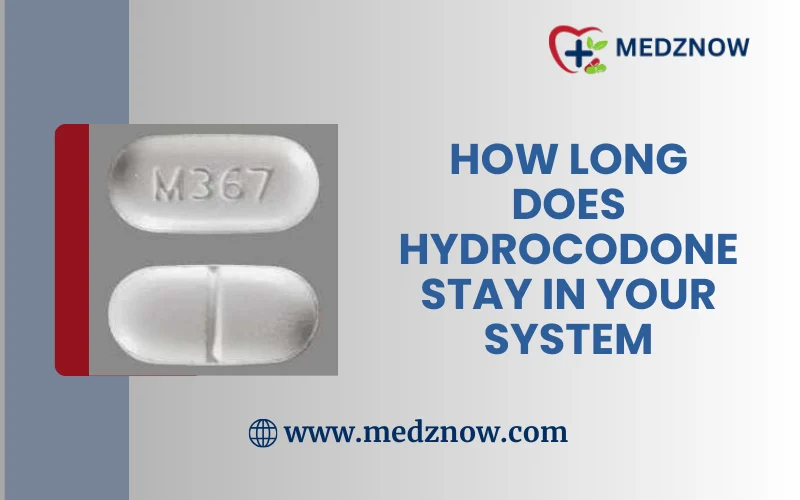
There can be several situations, like participating in sports activities, qualifying for a job, or simply in case of any illness, where taking a drug test is mandatory. A common misconception is that all drugs pass out easily from the body and are not detectable. Although this can be true in some cases, but maximum drugs are easily identified even after weeks and months. Hydrocodone belongs to one such category of drugs that can stay in the body for as long as 90 days, and therefore, its traces can be found easily in parts like hair, urine, saliva, even after days. It is important to understand how long does Hydrocodone stay in your system to avoid various complications.
In this blog, we will discuss in more detail the drug Hydrocodone, how long does Hydrocodone stays in your system, how to detox the body from Hydrocodone, and what the withdrawal symptoms are.
What Is Hydrocodone? And Its Side Effects
Hydrocodone was first developed in Germany in 1920 and comes in the form of an oral tablet. In previous days, Hydrocodone was used as a cough suppressant, but in recent years, it has mainly been used as a pain-relieving medication. Prolonged use of Hydrocodone can cause dependency, and if stopped suddenly, will cause withdrawal syndrome. People suffering from severe pain should not fear withdrawal syndrome and cut off Hydrocodone completely; instead, they should consult a doctor and act according to their advice.
Like other Opioids, Hydrocodone also causes some side effects due to its interaction with the central nervous system. Various side effects that can be seen are:
- Diarrhea
- Loss of appetite
- Nausea
- Rashes
- Vomiting
In addition to these, sudden dizziness is felt when you wake up from a sitting or lying position.
How Long Does Hydrocodone Stay In Your System?
According to various studies, it takes approximately 18-24 hours to clear 90 percent of Hydrocodone from the body, although this timeframe may vary depending on the specific parts of the body. Most organizations use the following test to detect the drug.
- Urine: Hydrocodone stays in the system for a urine test for around 1-4 days after the person takes it.
- Blood: In the blood, this is detectable even after 24 hours of intake.
- Saliva: After taking a dose, Hydrocodone is detectable between 12 to 36 hours in the saliva.
- Hair: Hydrocodone is detectable for 90 days in the hair, which contributes to being the longest period.
Factors Delaying The Process of Hydrocodone Removal
The time discussed above is not the same for every individual. Various factors like age, frequency of intake, dosage, and the organs of the body contribute towards deciding how long Hydrocodone will stay in the body. Let’s discuss each of the factors.
- The metabolism of humans decreases with the increase in age, which makes it difficult for the body to remove toxins quickly. So the process of Hydrocodone removal is much faster in young adults compared to people of higher age groups.
- If the individual takes a drug frequently, then the body absorbs more of it, and it becomes difficult to remove faster. In addition to the frequency, the amount of Hydrocodone dosage also plays a key role, because frequent intake in huge amounts often leads to addiction and increased tolerance level, which hinders the removal process.
- Organs such as the kidney and liver are primarily responsible for toxin removal from the body. If the physician prescribed Hydrocodone to an individual having any issue in these organs, then there is a fair chance that the remains of the drug will be found in their body for a very long period without being able to be flushed out.
How To Detox The Body From Hydrocodone?
Hydrocodone, as we have already discussed, is known to develop dependencies in humans, and it also takes some time to completely flush out of the body. It’s important to be aware of how to detoxify the body from Hydrocodone and the methods used in the process. The steps taken are:
- Your doctor may run various tests on your body, specifically urine and blood, to check for any history of abuse of any kind of drugs.
- Your healthcare providers might suggest different medications like Methadone, Buprenorphine, Clonidine, and Naltrexone. Along with these medicines, various antidepressants are provided to patients who develop anxiety and depression due to a lower intake of Hydrocodone.
- You can try to reach out to various NGOs, since they assist in taking care of the patients and even provide free treatments.
- Do not take drastic measures like cutting down the entire drug at once; instead, take small steps like reducing the amount of the dose and starting to invest time in favourite hobbies.
What Are The Withdrawal Symptoms of Hydrocodone?
Hydrocodone possesses a high risk of getting a person addicted to it. Some people try to misuse the drug by taking much higher doses and end up getting hooked on the drug. If the drug is suddenly cut off, then it has a much adverse effect. Doctors usually recommend lowering the dose gradually instead of completely cutting it off.
Various withdrawal symptoms include:
- Agitation
- Muscle ache
- Sweating
- Insomnia
- Goosebumps
- Nausea
The physical symptoms usually start within one to two days of the last intake and peak around 48-72 hours, but various psychological symptoms, such as feeling depressed, losing focus, and hallucinating, may take a much longer time to get over.
Frequently Asked Questions (FAQs)
Does drinking water flush out Hydrocodone faster from the body?
Drinking sufficient water is a good step that helps the body clear toxins, but it has not been proven that it speeds up the process of complete removal of Hydrocodone.
Should I take a double dose in case I missed one?
In case of a missed dose, if it’s not the time for the next dose yet, then you can take it. But, if it’s almost time for your next dose, stick to your schedule.
Conclusion
We can conclude that Hydrocodone, being an Opioid, is usually recommended by doctors as a pain reliever. This drug remains in parts of the body for a very long time does not get removed easily due to various underlying factors. Both overuse and underuse of this drug are harmful to health, so just stick to the prescribed dose of the doctor. In case you feel alone, depressed, or anxious, then try to seek help, and most importantly, remember that you are not alone.