

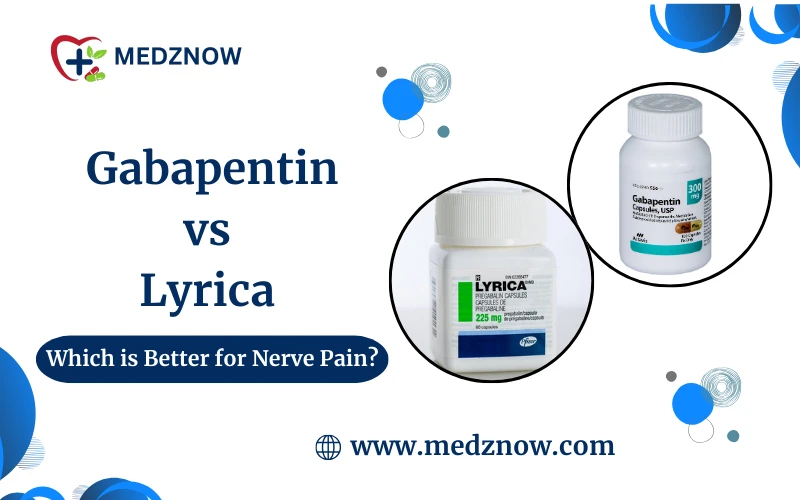
Have you recently been through any surgery and suffer pain that is just unbearable? Your doctor is most likely to suggest anticonvulsants to deal with the nerve pain that occurs due to such cases. From the family of anticonvulsants, Gabapentin and Lyrica are the ones that are commonly prescribed by the doctor. Both these help ease the pain and provide relaxing effects. So, are they completely similar to each other, or are there any factors that make them apart? We will discuss these in this blog, Gabapentin vs Lyrica. In addition, this blog will provide you with complete insights into the half-life, dosages, and who shouldn’t be prescribed, and a lot more.
Lyrica vs Gabapentin Comparison: Dosage, Benefits & Risks Explained
What Are Gabapentin and Lyrica?
Gabapentin is a prescription drug, sold under the brand name Neurontin, and is mainly used for the treatment of epilepsy and nerve pain. It comes in the form of a tablet and can be taken without food or water. It helps in relieving pain by interfering with the pain signals and modifying the way our body reacts to it. There are several side effects of taking this drug; hence, just try to stick to the prescription for the best results.
Lyrica is the brand name for Pregabalin, and is primarily used for the treatment of nerve pain and seizures in people with epilepsy. This comes in the form of capsules and liquid solution and can be taken with or without food. It prevents the release of certain chemicals from the brain that can cause pain.
What’s The Difference Between Gabapentin and Lyrica?
Gabapentin and Lyrica, despite being common in several ways, such as their class of drugs and the type of treatment they are used for, have some factors, such as the dosage administered to them, side effects, potency, and several others, which make them apart from each other. Let’s discuss those factors.
Half-life of Gabapentin vs Lyrica
The half-life of the drug is defined as the amount of time it takes for the drug to leave the system. Gabapentin and Lyrica require different times to get rid of the body completely.
The half-life of Lyrica is:
- Urine test: In this case, the drug is detectable for 5-6 days after the last dose
- Blood test: The particles of the drug remain for around 2 days in the blood.
- Hair follicle test: Lyrica stays for the longest period of time in the hair follicle, i.e., 90 days.
The half-life of Gabapentin:
- Urine test: It is detectable in the urine for up to 3 days after the last dose
- Blood test: Detectable for 5-7 hours after the last dose
- Hair follicle test: Gabapentin also lasts the longest in blood, i.e., 90 days.
Gabapentin vs Lyrica Doses
The dosages recommended for Gabapentin and Lyrica are highly subjective since they depend on the condition of the patient and the type of disease for which they are being administered.
Dosage of Gabapentin:
- For epilepsy: The Gabapentin dose for epilepsy in case of adults and children over the age of 12 years is 900 mg to 3600 mg a day.
- For nerve pain: The dose for nerve pain is also 900 to 3600 mg a day, divided into three doses.
Dosage of Lyrica:
- For nerve pain from diabetic peripheral neuropathy: The starting dose of Lyrica for nerve pain is 150 mg per day, which is divided into 50 mg three times a day. Your physician may increase the dose up to 300 mg per day within a week if the body responds well to the drug.
- For fibromyalgia, the starting dose is 150 mg per day, divided into 75 mg twice daily, and the dose can be increased up to 300 mg per day.
- For nerve pain from shingles, the doctor prescribes a starting dose of 150 mg per day, which can be increased up to 300 mg per day.
Side effects of Gabapentin vs Lyrica
The people prescribed Gabapentin and Lyrica have faced some of the adverse effects. These effects of taking Gabapentin and Lyrica together can range from mild to severe. If you are also under a prescription and notice some effects, it is better to consult your healthcare provider. The common and milder side effects produced by Gabapentin and Lyrica are:
- Drowsiness
- Dizziness
- Dry mouth
- Edema
- Eye problems
In addition to these effects, Gabapentin can also cause depression, thoughts of self-harm, swollen glands, continuous stomachache, and muscle pain. Lyrica can have effects like breathing problems, severe allergies, and low platelet levels. If you notice all these symptoms after taking the drug, then inform your doctor immediately and try alternatives to each of these drugs.
Which Is Better, Gabapentin or Lyrica?
To choose which is more effective, Gabapentin and Lyrica are difficult since both are equally effective in their own way. Therefore, their efficacy can only be determined by the people who use them and whether they help them in easing their symptoms or not. Lyrica has a higher absorption rate, making it the best option for immediate treatment of the symptoms. Gabapentin can be used for long-term treatment due to its lower potency, which causes significantly lower addiction than Lyrica.
Who Shouldn’t Take Gabapentin and Lyrica?
Certain underlying conditions make Gabapentin and Lyrica unsuitable for some people. It’s important to know about those conditions to avoid these drugs so that the conditions won’t be complicated. You should avoid Gabapentin if you are planning pregnancy, have a history of drug misuse, and kidney dysfunction. Similarly, people with an allergy to Lyrica or Lyrica CR, Pregabalin, or any of the ingredients present in it should avoid Lyrica.
Can You Take Gabapentin and Lyrica Together?
As discussed, Gabapentin and Lyrica are both used to treat pain, so what happens when you take Lyrica and Gabapentin at the same time? Some try to mix these drugs and use them as additives, which is strictly forbidden because there is a risk of increasing sedation by excess intake of these drugs. The mixture of these drugs can increase effects like drowsiness, dizziness, and respiratory issues. Doctors may occasionally suggest lowering the dose of the ongoing drug to start administering another one. The end decision should always depend on the physician, and you should not make any changes for any illegal purposes.
Alternatives To Gabapentin and Lyrica
Everyone doesn’t show a positive reaction to Gabapentin and Lyrica. People who do not react well to these drugs are prescribed the alternatives.
Alternatives for Gabapentin
- Lyrica
- Mirogabalin
- Duloxetine
- Vraylar
- Caplyta
Alternatives for Lyrica
- Gabapentin
- Topiramate
- Keppra
There can be several other options for Gabapentin and Lyrica, other than these, which the doctor will prescribe according to the needs.
Frequently Asked Questions (FAQs)
Which is safer, Gabapentin or Lyrica?
Both Gabapentin and Lyrica are safer for use, but certain conditions, like ingredients and side effects, can make each of these drugs suitable for one while unsuitable for the other.
Why is Lyrica a controlled substance, and Gabapentin is not?
Lyrica is more potent than Gabapentin, and its absorption rate is higher than that of Gabapentin, making it a highly addictive and controlled substance.
Is Gabapentin and Lyrica the same thing?
Gabapentin and Lyrica are not the same since they vary from each other in many ways, such as side effects, dosages, ingredients, and many other aspects.
Gabapentin vs Lyrica, which is stronger?
The potency of Lyrica makes it stronger as compared to Gabapentin. This is also the reason for wich Lyrica is more addictive than Gabapentin and is a controlled substance.
Conclusion
At the end of this blog, we can conclude that Gabapentin and Lyrica are each efficient in their own way, and ultimately, it depends upon the patient’s condition as to which of these will be a better option to choose from. Try not to misuse the drug and stick to the prescribed doses to achieve the desired results.