

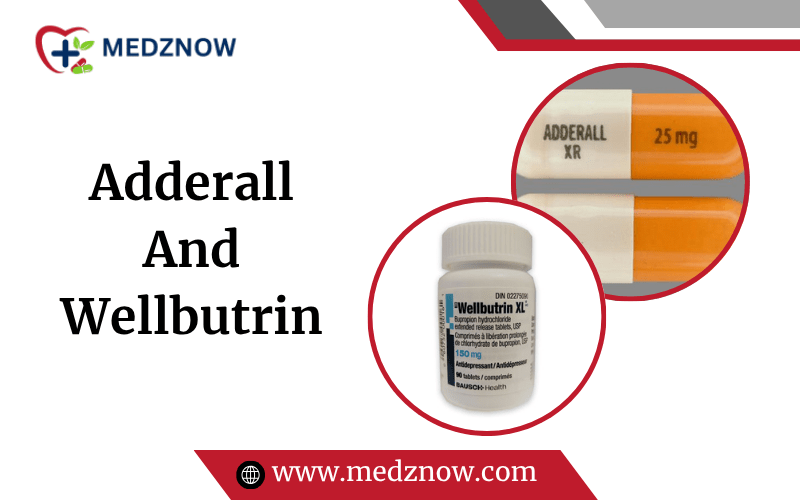
Are you seeking treatment for both Attention-Deficit/Hyperactivity Disorder (ADHD) and depression? When it comes to any treatment while Medication plays a significant role. Thus, commonly these medications prescribed for these conditions are Adderall and Wellbutrin. Both are works in the brain in different ways. However, when using individuals’ medicines at once, either that leads risk of side effects or treats the condition smartly according to your unique needs. But what happens when these two powerful medications are combined, and can you take Adderall and Wellbutrin together? What should be ensured before this approach? In this blog, we explore the difference between Adderall Vs Wellbutrin, their potential benefit and risks.
What is Adderall?
Adderall is a prescription stimulant drug that is used to treat attention deficit hyperactivity disorder (ADHD) and narcolepsy in adults and children. It contains amphetamine and dextroamphetamine, which help to manage hyperactivity and impulse control disorders. But Adderall is classified as a Schedule II substance due to its misuse, abuse, and dependence. Thus, always use the drugs with proper healthcare professional guidance.
What is Wellbutrin?
Wellbutrin (bupropion) is an antidepressant drug used to treat depressive disorder, seasonal affective disorder (SAD), and sometimes prescribed off-label for ADHD. Its active ingredients are bupropion hydrochloride and Zyban. Zyban is commonly used to overcome smoking addiction. The drugs also have some risks, like abuse, dependence, and addiction. Thus, only use it with professional guidance.
Can You Take Adderall and Wellbutrin Together?
Yes, you can taking Adderall and Wellbutrin, sometimes prescribed together for individuals with Adderall and Wellbutrin for ADHD and depression. But they are combining to increase the risk of side effects such as anxiety, insomnia, elevated blood pressure, and, rarely, seizures. Wellbutrin can raise the stimulant level in the body. Thus, medical supervision is important when using both drugs for adverse reactions and adjusting the dose when needed. Avoid self-medicating and combining these drugs without a doctor’s guidance, and always be careful to ensure safety and effectiveness.
How To Take Adderall And Wellbutrin Together?
Always take Adderall and Wellbutrin together with caution due to the risk of seizures, increased blood pressure, and CNS overstimulation. Both medications affect dopamine and norepinephrine and increase side effects like anxiety, insomnia, and irritability. It’s important to start the dose at a low and carefully monitor for any adverse effects. Need regular check-ups to assess heart health, blood pressure, and mental well-being. Always consult with the doctor before starting or combining these medications, and avoid stopping or adjusting doses without medical supervision.
Key Difference Between Adderall Vs Wellbutrin
Adderall and Wellbutrin belong to different drug classes, and they work in different ways. Thus, they have differences such as uses, mechanisms, duration, potency, effectiveness, and side effects. It’s important to understand the difference between Adderall and Wellbutrin before using them.
- Drugs Class: Adderall belongs to the Central nervous system stimulants, while Wellbutrin comes to the Norepinephrine-dopamine reuptake inhibitor (NDRI) drugs class.
- Controlled Substance: Adderall is a controlled substance because it has more high potential for abuse, whereas Wellbutrin is not a controlled substance and that less potential than Adderall.
- Formulation: Adderall has two forms: Immediate-release tablet, extended-release capsule (Adderall XR), while Wellbutrin is available in XL tablet (extended-release), SR tablet (sustained-release).
- Onset of Action: Adderall takes 30 to 60 minutes to start working, while Wellbutrin starts its work within 1–2 weeks for depression relief.
Adderall And Wellbutrin Dosage
Adderall and Wellbutrin dosage are different; thus, before using these medications individually or combined, ensure that their dosage helps to avoid unwanted side effects and overdose risks. The proper prescribed dose improves your quality of life.
Adderall Dosage
- Adult dosage: 5 to 40 mg of Adderall per day, divided the dose 3 doses daily
- 3-5 years old: 2.5 to 40 mg per day, divided the dose 3 times daily
- 6 years and older: 5 to 40 mg per day divided 3 times daily
Wellbutrin Dosage:
- XL (extended-release): 150 mg or 300 mg once daily in the morning. However, don’t chew or crush. Take it with or without as directed by the healthcare professional.
- SR (sustained-release): 150 mg twice daily (with or without food). But don’t chew or crush.
Adderall and Wellbutrin Side Effects
Adderall is effective for many ADHD patients, but it comes with unwanted side effects. Its common side effects are insomnia or difficulty sleeping, nervousness or anxiety, loss of appetite, weight loss, dry mouth, nausea or stomach upset, dizziness, headache, increased heart rate, and elevated blood pressure. There is no need for medical attention. While some severe side effects require immediate medical attention. These are
- Heart palpitations or chest pain
- Shortness of breath
- Excessive fatigue or weakness
- Behavioral changes, such as aggression or paranoia
- Hallucinations or delusions
- Seizures
Similarly, Wellbutrin has some common side effects such as dry mouth, sore throat, dizziness, nausea or vomiting, headache, loss of appetite, weight loss, constipation, increased sweating, tremor, fast heartbeat, confusion, and insomnia. In certain cases, looking at wellbutrin’s serious side effects such as seizures, hypertension, mood or behavioral changes, hallucinations, confusion, and unusual thoughts.
Side Effects of Combining Wellbutrin and Adderall
Both drugs have different ingredients, uses, and they work in different ways. Combining these medications under medical supervision, otherwise that leads to some unwanted side effects such as seizures, weight Loss, liver damage, heart problems, serotonin syndrome, and psychological effects such as paranoia and confusion
Alternative Option For ADHD & Depression
Adderall is the most effective treatment for ADHD, while Wellbutrin is most popularly used to treat depression. But, in certain cases, you are considering the alternative to Adderall and Wellbutrin because of the side effects or interactions. There are several options for treating ADHD and depression. Such as
- Alternatives for ADHD (Attention Deficit Hyperactivity Disorder): Non-Stimulant Medications (Strattera (atomoxetine) and Intuniv (guanfacine) / Kapvay) and Other Stimulants (Vyvanse (lisdexamfetamine) and Concerta (methylphenidate) / Ritalin)
- Alternatives for Depression: SSRIs (Prozac (fluoxetine), Zoloft (sertraline), Lexapro (escitalopram), Paxil), SNRIs (Effexor (venlafaxine), Cymbalta), and Tricyclic Antidepressants (Amitriptyline, Nortriptyline, Imipramine)
- Combined ADHD and Depression Treatment: A combination of a stimulant for ADHD (Vyvanse) with an SSRI/SNRI for depression (Prozac or Cymbalta) is prescribed by the healthcare provider and Mindfulness and Cognitive Behavioral Therapy (CBT) can be highly effective for ADHD and depression. It’s a safe and effective non-medication alternative to pharmaceuticals.
Lifestyle Adjustments and Natural Supplements
- Omega-3 fatty acids (fish oil) help with both ADHD and depression.
- Regular exercise helps boost mood and improve focus.
- Get complete sleep, as ensuring consistent, quality sleep improves both mental clarity and emotional stability.
- Mindfulness or meditation helps reduce stress, anxiety, and symptoms of both ADHD and depression.
Final Words
Adderall and Wellbutrin are effective for managing depression and ADHD individually, but when it comes to combining them. It needs careful monitoring by a healthcare provider that minimize side effects and ensure the safe use of both medications. If you are prescribed both drugs, then start with lower doses and regular check-ups. Always, your health and well-being should come first.